
Best Way to Clean Vinyl Siding Without a Pressure Washer
Columbia Exterior Cleaning
Local exterior-cleaning crew ·
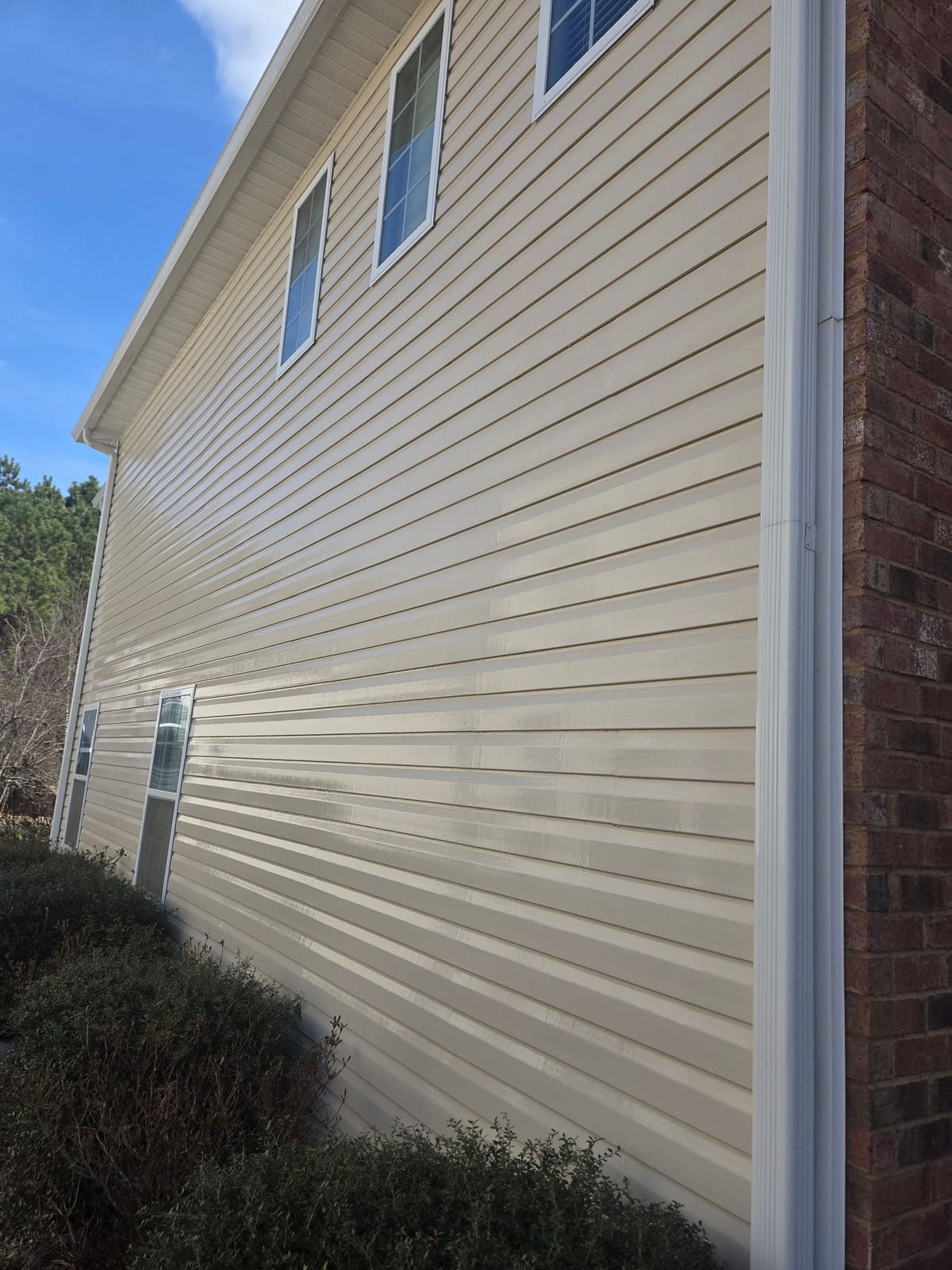
Yes — vinyl siding can be cleaned safely and effectively without a pressure washer. A garden hose, a soft-bristle or long-handled siding brush, and the right cleaning solution will handle most dirt, pollen film, and light algae staining without any risk of forcing water behind panels or cracking a seam. Here's the method, step by step, and how to tell when it's time to call in a professional instead.
Why Pressure Washers Are Riskier Than They Look on Vinyl
Vinyl siding is durable against weather, but it's not designed to take a direct hit from high-pressure water. Held too close, at too steep an angle, or at too high a PSI, a pressure washer can:
- Force water behind panels and trim — this is the biggest risk. Water that gets behind vinyl has nowhere to evaporate quickly, and it creates the exact damp, dark conditions mold needs to grow where you can't see it.
- Crack or warp panels, especially older or sun-brittled vinyl
- Blast growth off the surface without killing the roots, so algae and mildew return within weeks instead of staying gone for a season
None of that means your siding can't be cleaned effectively — it just means the method matters more than the equipment.
The Step-by-Step DIY Method
1. Rinse First
Hose down the siding from top to bottom with plain water to knock loose dirt and pollen film off before applying any solution.
2. Protect Landscaping
Saturate any nearby beds, shrubs, and grass with plain water before you start, and plan to rinse them again when you're done — this protects plants from any cleaning solution runoff.
3. Choose the Right Solution
For light dirt: a mix of warm water and a few drops of mild dish soap. For algae, mildew, or green/black streaking: use a cleaner formulated to kill the organism (most contain a mild bleach or oxygen-based solution) rather than just lift surface dirt — otherwise you're removing what you can see without solving what's underneath.
4. Apply Low to High
Using a soft-bristle brush or a pump sprayer, apply the solution starting at the bottom of the wall and working up. This sounds backwards, but it prevents the solution from streaking down through dry, dirty siding above and leaving new stripes.
5. Let It Dwell
Give the solution several minutes of contact time on any algae or mildew staining — this is what actually kills the growth at the root, not the scrubbing.
6. Rinse High to Low
Rinse with a garden hose starting at the top and working down, the opposite order from application, so dirty runoff doesn't re-stain a section you've already cleaned.
What Columbia's Climate Does to Vinyl Siding
Homes in the Midlands deal with a specific mix of siding grime that homes in drier climates don't:
- Black and green algae streaking — humid, shaded conditions (especially north-facing walls under oak or pine canopy) are ideal for algae growth, and it's the most common staining issue we see on Columbia siding.
- Spring pollen film — oak and pine pollen coats siding in a yellow-green layer almost overnight every spring, and it's sticky enough that a plain rinse often isn't enough to fully clear it.
- Mildew on shaded elevations — persistent humidity keeps shaded walls damp longer than sun-exposed ones, which is why mildew tends to show up in patches rather than evenly across the house.
When DIY Isn't Enough
A garden hose and brush is realistic for a single-story home with light-to-moderate buildup. Consider calling a professional when:
- The house is two stories, and reaching upper siding safely means a tall ladder
- Algae or mildew coverage is heavy or has been building for several years
- You want the job done once, correctly, with a guarantee — not a weekend project that needs to be repeated in a few months
Tools and Supplies Checklist
- Garden hose with an adjustable spray nozzle
- Soft-bristle scrub brush or a long-handled siding brush for second-story reach without a ladder
- A pump sprayer for even solution application
- A cleaning solution rated for algae/mildew if you're dealing with staining, or mild dish soap for light dirt
- Bucket for mixing, and gloves and eye protection when working with any bleach-based solution
- Drop cloths or plastic sheeting near outlets, light fixtures, and anything you don't want the solution reaching
Troubleshooting Common Siding Stains
Chalky White Residue (Oxidation)
Older vinyl siding can develop a chalky film as the surface finish breaks down from UV exposure over the years. A standard cleaning solution helps, but heavy oxidation is a sign the siding is aging and may not fully restore to a like-new look with cleaning alone — that's a siding condition issue, not a cleaning-method issue.
Rust Streaks
Usually from a nearby fastener, gutter hanger, or piece of outdoor furniture. General algae/mildew cleaners won't fully remove rust staining — that typically needs a rust-specific remover applied directly to the streak.
Tree Sap or Pollen Film
Spring pollen and pine sap respond well to a warm, soapy solution and a bit more dwell time than plain dirt. Don't let sap sit through a full season before addressing it — it hardens and becomes noticeably harder to remove the longer it's exposed to sun.
How a Professional Soft Wash Differs
Professional house washing uses the same core principle as the DIY method — chemistry over force — but with commercial-grade equipment, a properly diluted solution dialed to your siding's condition, and technique refined over hundreds of Midlands homes. For the full comparison of when soft washing beats pressure washing (and vice versa), see Soft Wash vs. Pressure Wash.
Want a professional soft wash instead of a weekend with a brush and a hose? Call or text (803) 717-3217 for a free quote, or learn more about our house washing service.
Frequently Asked Questions
Can you clean vinyl siding without a pressure washer?
Yes. A garden hose, a soft-bristle brush or long-handled siding brush, and a mild cleaning solution (or a mix of water and mild dish soap for light dirt) will handle most day-to-day grime. For algae, mildew, or mold staining, you'll need a solution formulated to kill the organism, not just wipe it off the surface, or it returns within weeks.
Why shouldn't I just use a pressure washer on vinyl siding?
A pressure washer held too close or at too high a PSI can force water behind vinyl panels, seams, and trim — leading to hidden mold growth, warped panels, and water intrusion issues that are far more expensive than the algae staining you started with. Even when it does not cause visible damage, high pressure blasts growth off the surface without killing the roots, so it comes back fast.
How often does vinyl siding need to be cleaned in Columbia, SC?
Most Columbia-area homes need a full exterior cleaning once a year. Homes shaded by heavy oak or pine canopy, or with north-facing walls that stay damp, often need attention closer to every 12 months to stay ahead of algae regrowth — soft-washed results typically hold up 12–18 months before streaking becomes visible again.
Prefer to talk? Same-day answers — open 7 days, 7am–8pm.
(803) 717-3217Ready to Protect Your Home?
Free quotes, same-day response. Serving Columbia and the SC Midlands (Richland & Lexington counties).