
DIY vs. Professional Pressure Washing: Best Pressure Washers for Siding, Concrete & Roofs
Columbia Exterior Cleaning
Local exterior-cleaning crew ·
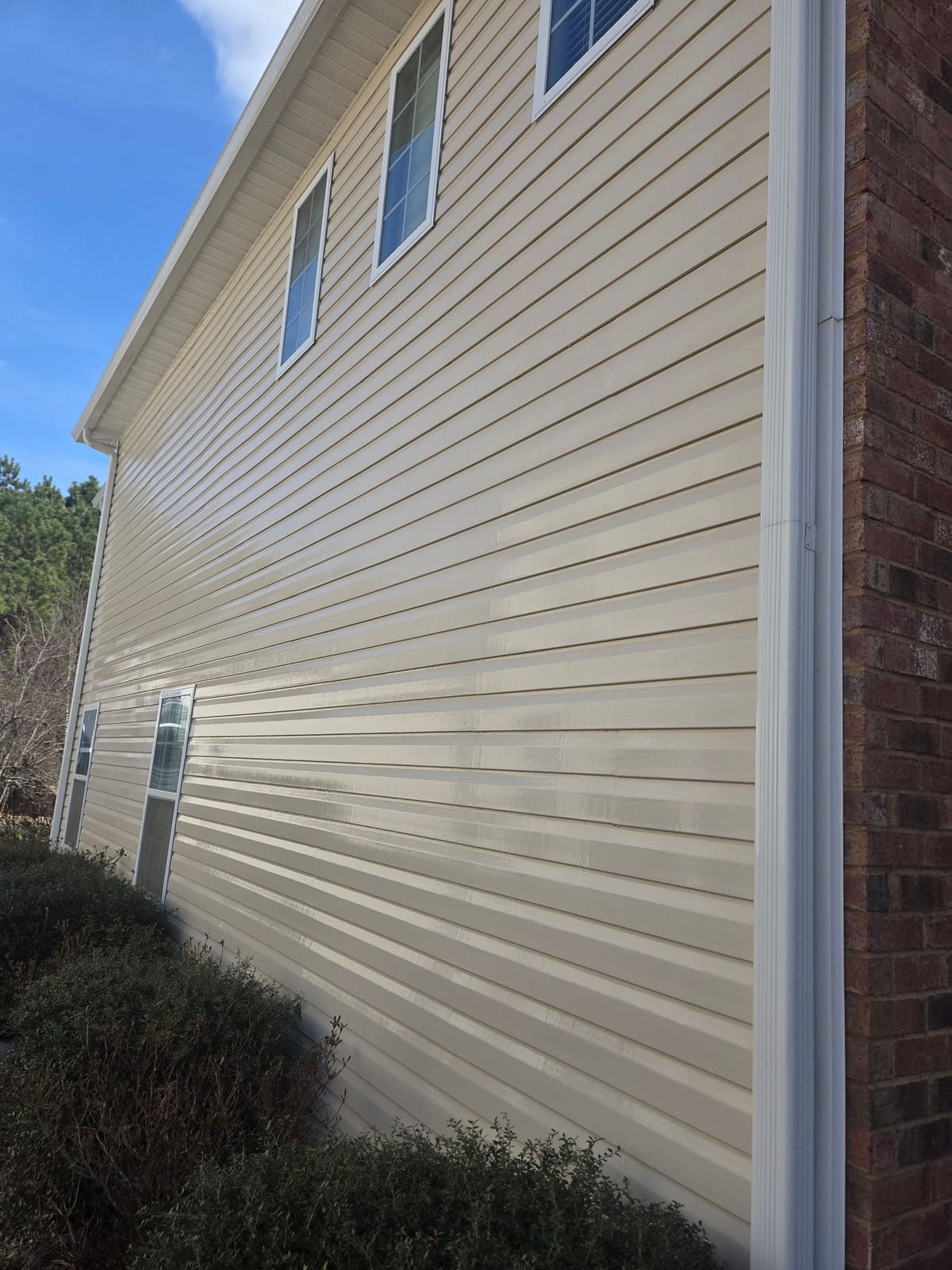
Whether DIY makes sense comes down to the surface, not just the equipment. A driveway is a reasonable weekend project with a rented or consumer-grade pressure washer. Siding and roofs are a different story entirely — they shouldn't be pressure washed at high PSI regardless of what machine you own, and the risk of damage (or a fall) is real enough that most homeowners are better off calling a professional for those two surfaces specifically.
PSI and GPM, Explained Simply
PSI (pounds per square inch) measures the force of the water stream — how hard it hits the surface. GPM (gallons per minute) measures the volume of water moving through the machine — how much water is doing the work. Cleaning power is really a combination of both (sometimes expressed as "cleaning units," PSI × GPM), not PSI alone. A higher-GPM machine can clean effectively at lower pressure, which is exactly why commercial soft-wash rigs use low PSI but still get algae and mildew off a roof or wall — it's the chemical solution and dwell time doing the work, not brute force.
Best Equipment by Surface
Concrete Driveways and Sidewalks
This is where a real pressure washer earns its keep. A gas-powered unit in roughly the 2,800–3,200 PSI range, paired with a rotating surface cleaner attachment, lifts embedded dirt and staining evenly across a slab without the streaky pattern a single wand tip leaves behind. This is the one surface category where more power genuinely helps.
Vinyl, Wood, or Fiber-Cement Siding
Siding is not a pressure-washing job at all — it's a soft-wash job. A pump sprayer to apply a cleaning solution, dwell time, and a garden-hose rinse will out-perform a high-PSI machine, because the goal is killing algae and mildew at the root, not blasting the surface. See our full breakdown in Best Way to Clean Vinyl Siding Without a Pressure Washer.
Roofs — Shingle, Metal, or Tile
Never high pressure, on any roofing material. Roof cleaning is exclusively a low-pressure, chemistry-based soft wash — see Roof Cleaning Without Pressure Washing for exactly why.
Decks and Fences
A moderate-pressure consumer or gas washer with an adjustable, wide-fan nozzle works, provided the pressure is dialed down to match the material — wood, composite, and pavers each tolerate different settings. Full method in our deck cleaning guide.
What Equipment Actually Costs
As a general guide to the current DIY equipment market — not a quote for our services — electric pressure washers typically run in the low hundreds of dollars and are fine for light-duty jobs like patio furniture or a small patio. Gas-powered consumer units capable of tackling a full driveway typically run several hundred dollars and up. Commercial-grade rigs, and the hot-water units and dedicated soft-wash systems professionals use, are a significantly larger investment — which is part of why hiring the job out is often more cost-effective than buying equipment you'll use once or twice a year.
Where DIY Makes Sense
- A small driveway, patio, or walkway with light-to-moderate staining
- Outdoor furniture, trash cans, or small hardscaping
- A single-story home with light dirt buildup and no significant algae
Where It Doesn't
- Two-story siding — ladder fall risk plus the risk of forcing water behind panels if the pressure or angle is off
- Any roof — fall risk, plus the granule-stripping damage high pressure causes on shingles
- Heavy, longstanding algae or mildew on any surface — getting the solution concentration and dwell time right takes experience, and a bad DIY attempt can knock growth back cosmetically without killing it, meaning it returns within weeks
- Anywhere you're not confident about pressure settings — a gouged deck board or a cracked stucco patch costs a lot more to fix than the DIY attempt saved
What You're Really Paying For With a Pro
It's not really the machine — most of what separates a good exterior cleaning visit from a bad one is knowing which of four surfaces needs which of four settings, in the same visit, without guessing. That's the difference between owning a pressure washer and running a method: pressure on concrete, soft wash chemistry everywhere else, dialed to the specific material every time. Add in insurance, a clean-again guarantee, and not having to rent or store equipment you'll use twice a year, and for anything beyond a driveway, professional service is usually the better trade.
A Simple Decision Framework
Before buying equipment or booking a weekend for a DIY project, run through three questions:
- What surface am I actually cleaning? If the answer is concrete or hard flatwork, a rented or purchased pressure washer is a reasonable tool. If it's siding, a roof, or anything painted or porous, you need chemistry, not pressure — no machine changes that.
- Does the job involve a ladder or roof access? If yes, weigh the fall risk seriously against the cost of hiring it out. This is the single biggest safety factor in the DIY-versus-pro decision.
- How often will I actually use this equipment? A machine that sits in the garage for eleven months a year rarely pencils out financially compared to paying for the one or two visits a typical home actually needs.
Bottom Line
If you're weighing a purchase, start with what you're actually cleaning: concrete favors real pressure-washing equipment, while siding and roofs favor low-pressure chemistry every time, regardless of what machine is in the garage. For the surfaces where DIY carries real risk, it's worth getting a quote before you buy equipment you may only need once.
Not sure whether to DIY or call in a pro? Call or text (803) 717-3217 for a free assessment, or see our full Columbia, SC pricing guide to compare the cost against buying equipment yourself. Explore our pressure washing service.
Frequently Asked Questions
What is the best pressure washer for siding?
Siding shouldn't be pressure washed at all — it should be soft-washed, using low pressure (roughly garden-hose level) and a cleaning solution rather than a high-PSI machine. If you're set on a DIY approach, a pump sprayer for applying solution plus a garden hose for rinsing will get better, safer results than any consumer pressure washer used at typical settings.
What is the best pressure washer for cleaning concrete?
For driveways and concrete, a gas-powered pressure washer in the 2,800–3,200 PSI range with a surface cleaner attachment gives the most even results without streaking. Electric pressure washers can handle light concrete cleaning but generally take longer and produce less consistent results on heavily stained or large driveways.
Should I ever pressure wash my own roof?
We'd strongly recommend against it. Beyond the fall risk of working on a roof, high-pressure water strips protective granules off asphalt shingles and can force water under shingle laps — damage that isn't obvious right away but shortens the roof's lifespan. Roof cleaning should always be a soft wash, and given the height and chemical-handling involved, it's one of the clearest cases for hiring a professional.
Prefer to talk? Same-day answers — open 7 days, 7am–8pm.
(803) 717-3217Ready to Protect Your Home?
Free quotes, same-day response. Serving Columbia and the SC Midlands (Richland & Lexington counties).