
The Best Way to Power Wash a Deck Without Damaging the Wood
Columbia Exterior Cleaning
Local exterior-cleaning crew ·
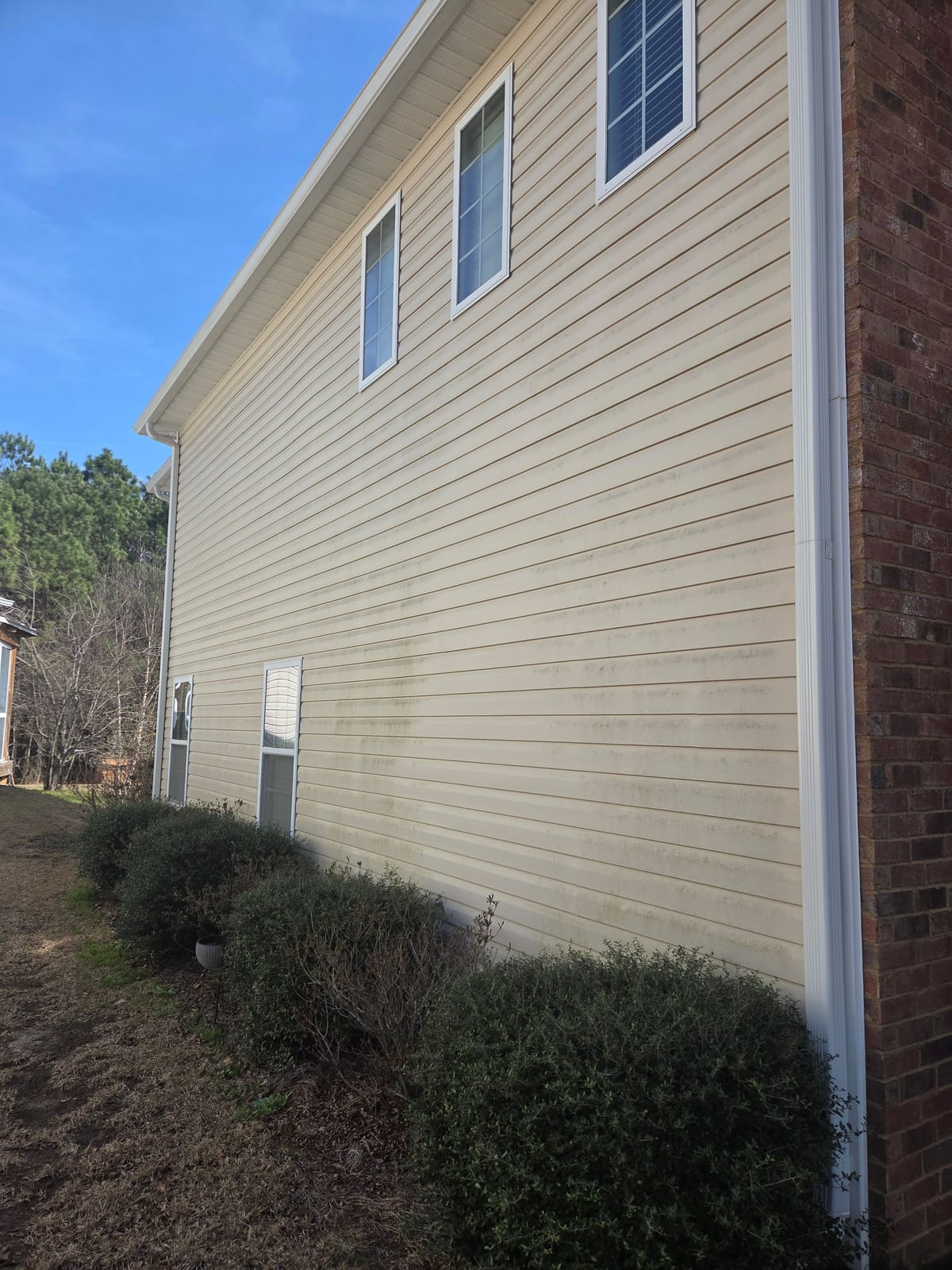
The best way to power wash a deck is to match the pressure setting to the material, keep the nozzle moving at all times, and work in the direction of the wood grain. Decks are one of the easiest surfaces to accidentally damage with a pressure washer — too much pressure, too close, or too long in one spot gouges wood fibers and can blow apart the surface layer of composite decking. Here's the method that gets a deck clean without wrecking it.
Match Pressure to the Material
- Pressure-treated wood can generally handle a moderate pressure setting with a wide fan tip (25° or wider), held a safe distance from the surface — but "can handle" doesn't mean it should be maxed out. Softer or older wood needs a gentler setting.
- Composite decking needs the lowest pressure of the common deck materials and a wide fan tip. High pressure on composite can etch and roughen the surface layer, which then holds dirt and mildew more aggressively going forward — the opposite of what you want.
- Pavers, stone, and concrete deck surfaces tolerate higher pressure since they're a hard, non-porous surface — closer to the driveway end of the spectrum than the wood end.
When you're not sure what your deck can take, test an inconspicuous corner first and start on the lower end of the pressure range. It's much easier to bump the pressure up than to undo a gouge.
Step-by-Step Method
1. Clear and Sweep
Remove furniture, planters, and rugs, and sweep off loose leaves and debris — Columbia decks under oak and pine canopy tend to accumulate a steady layer of both, which turns to slick, staining sludge once wet.
2. Pre-Treat Algae, Mildew, or Green Staining
If you see green or black staining, apply a cleaning solution formulated to kill the growth before you start pressure washing, and let it dwell per the product instructions. Blasting algae off with pressure alone removes what's visible but not the roots, so it comes back fast — the same principle covered in our algae removal guide.
3. Test a Spot
Try your pressure setting on a hidden section — under a bench, near a corner — before working across the visible deck.
4. Work With the Grain
Move the nozzle in the same direction as the wood grain, not across it. Cross-grain passes are what gouge and fuzz the wood surface.
5. Keep the Nozzle Moving
Never let the tip sit stationary on wood, even briefly — that's how a "clean spot" turns into a gouged one. Keep the wand in constant, even motion, overlapping each pass slightly.
6. Rinse Thoroughly
Finish with a full rinse to clear away any remaining cleaning solution and loosened debris.
7. Let It Dry Fully
Give the deck at least 24–48 hours to dry before applying stain or sealant — longer in humid weather, which is most of the year in Columbia.
Common Mistakes That Damage Decks
- Using the wrong tip. A narrow, high-pressure "pencil jet" tip is for stripping paint and heavy stains off concrete, not for wood or composite decking.
- Holding the wand too close. Distance matters as much as PSI. The same pressure setting held 6 inches away versus 18 inches away produces very different results.
- Circular or cross-grain motion. This is the single most common cause of visible gouging on wood decks.
- Letting cleaning solution dry on the surface instead of rinsing within the product's recommended window — this can leave residue or streaking.
What Makes Columbia Decks Different
Heavy oak and pine canopy across the Midlands keeps decks shaded and damp longer than open-lot decks, which accelerates algae and mildew growth. Lake-area decks — Lake Murray and Chapin properties especially — deal with the same issue plus additional humidity off the water, and often need attention more frequently than an inland, sun-exposed deck.
Equipment Checklist for a DIY Deck Wash
- Pressure washer with an adjustable fan-tip nozzle (avoid narrow "pencil jet" tips entirely on wood or composite)
- Deck-specific or algae/mildew cleaning solution
- Pump sprayer for even solution application
- Stiff-bristle deck brush for stubborn spots the pressure alone doesn't lift
- Eye protection and gloves for solution handling
- Plastic sheeting to protect siding and landscaping from overspray
Getting the Deck Ready for Stain or Sealant
If cleaning is step one of a staining or sealing project, a few extra details matter. Beyond the 24–48 hour dry time, check for any remaining mildew in shaded corners or under railings — sealing over active growth traps it under the finish rather than removing it. Sand any raised grain or splintered spots after the deck is fully dry, since pressure washing (even done correctly) can slightly raise wood grain, and stain adheres better to a smooth surface.
When to Call a Pro
If your deck has heavy, longstanding algae staining, older or softer wood you're not confident about, or you're planning to stain or seal it right after cleaning and want the prep done correctly the first time, a professional visit takes the guesswork out of pressure and technique. Every surface — wood, composite, pavers — gets its own setting in the same visit.
Want your deck cleaned and ready for sealing without the risk of doing it yourself? Call or text (803) 717-3217 for a free quote, or check out our deck, fence & wood cleaning service.
Frequently Asked Questions
What PSI should you use to power wash a deck?
It depends on the material. Pressure-treated wood generally tolerates a moderate pressure setting with a wide-angle nozzle held at a safe distance, while composite decking needs a lower pressure setting and a wider fan tip to avoid surface damage. Pavers and stone can handle higher pressure. When in doubt, test an inconspicuous spot first and start lower than you think you need — you can always increase it.
How long should a deck dry before staining or sealing?
Most manufacturers recommend letting wood dry for 24–48 hours after cleaning before applying stain or sealant, longer if humidity is high or the weather has been overcast. Sealing over damp wood traps moisture underneath the finish, which leads to peeling and blistering.
Can power washing damage a deck?
Yes, if the pressure is too high, the nozzle held too close, or the tip moved across the grain instead of with it. Gouged wood, splintering, and stripped composite surfaces are the most common results of using a pressure washer set too aggressively for the material. Matching pressure to material and keeping the nozzle moving is what prevents this.
Prefer to talk? Same-day answers — open 7 days, 7am–8pm.
(803) 717-3217Ready to Protect Your Home?
Free quotes, same-day response. Serving Columbia and the SC Midlands (Richland & Lexington counties).