
How to Remove Algae, Mold & Green Stains from a Fence or Deck
Columbia Exterior Cleaning
Local exterior-cleaning crew ·
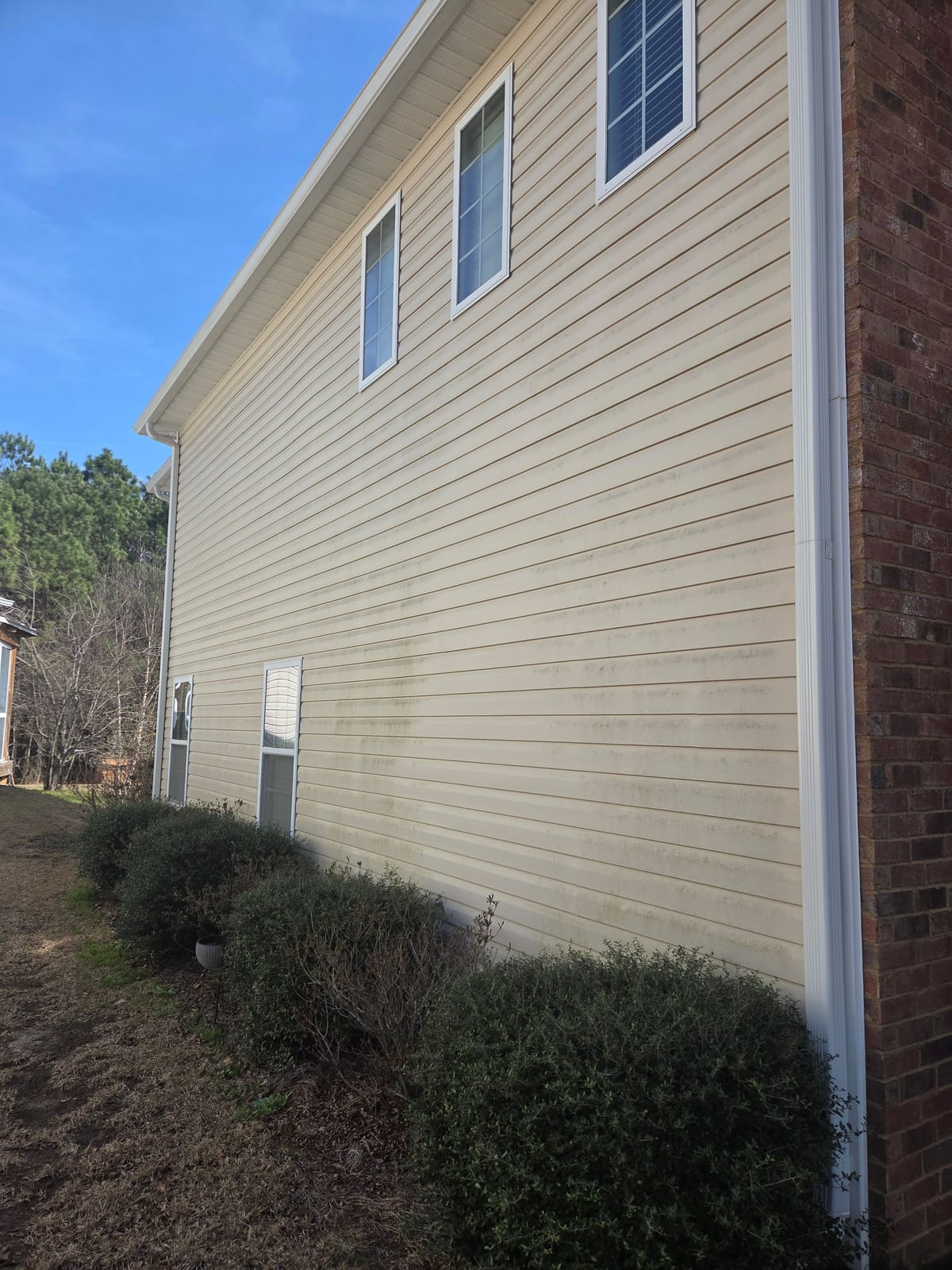
Green algae, black mold, and mildew on a fence or deck have to be killed at the root, not just scrubbed or blasted off the surface — otherwise it's back within weeks. The good news: the right cleaning solution and method handle it whether you're dealing with a wood fence, a vinyl privacy fence, or a wood or composite deck. Here's how to identify what you're looking at and remove it correctly by material.
Why Columbia Fences and Decks Grow This So Fast
The Midlands' humid subtropical climate is close to ideal growing conditions for algae and mold: consistent warmth, high humidity, and — for a lot of Columbia properties — heavy oak and pine canopy that keeps fences and decks shaded and damp well after a rain. Lakefront properties around Lake Murray and Chapin deal with an extra layer of humidity off the water, which is why lake-area decks and dock-adjacent fencing tend to need attention more often than an inland, open-lot yard.
What Are You Actually Looking At?
- Green algae — the most common culprit, appears as a green or green-black film, often starting at the base of a fence (the "green line") or on shaded deck boards. Makes surfaces slick when wet.
- Black mold/mildew — darker, often patchier staining, tends to show up in corners, under railings, or anywhere airflow is limited.
- Lichen — a grayish, crusty growth, less common on fences/decks than roofs but shows up on very old, undisturbed wood.
All three respond to the same core principle: kill it, don't just knock it loose.
Safe Removal Method by Material
Wood Fences and Decks
Apply a cleaning solution formulated to kill algae/mildew, let it dwell per the product's instructions, then rinse thoroughly with low-to-moderate pressure, working with the wood grain. High pressure directly on wood can gouge the surface — see our full deck cleaning method for pressure settings by wood type.
Vinyl Fences
Vinyl tolerates a cleaning solution well and generally needs less dwell time than wood. Pay particular attention to the base of the fence, where the "green line" of splash-back algae is most persistent, and get both sides — algae on the shaded side of a fence often outpaces the sun-exposed side by a wide margin.
Aluminum Fences
Aluminum is the least porous of the common fence materials and cleans up quickly with a solution rinse — the main risk is around fasteners and joints, where trapped moisture and organic debris collect.
Composite Decking
Use a lower-pressure setting than you would on wood, and avoid abrasive scrubbing — composite's surface layer can be roughened by aggressive cleaning, which then holds dirt and mildew more easily going forward.
Step-by-Step DIY Approach
- Clear the area of furniture, planters, and debris
- Saturate nearby landscaping with plain water to protect it from runoff
- Apply the cleaning solution to affected areas, working low to high
- Let it dwell for the time listed on the product — this is what actually kills the organism
- Rinse thoroughly, high to low, with pressure matched to the material
- Rinse landscaping again once finished
How Long Results Last — and How to Slow Regrowth
Once properly killed at the root, algae and mold staining on decks, fences, and concrete generally stays gone for around 12 months in the Columbia market. Two things speed regrowth back up: heavy shade and standing moisture. If overhanging oak or pine branches are keeping a section of fence or deck damp longer than the rest of the yard, trimming them back to let in more sun and airflow is one of the most effective ways to extend the time between cleanings.
Safety Note: Algae Makes Surfaces Slick
Beyond the cosmetic issue, algae-covered deck boards and fence-adjacent walkways get genuinely slippery when wet — a real fall risk on stairs. If you've noticed a deck or set of steps feeling slicker than usual, especially in a shaded corner, that's often algae establishing itself before it's visually obvious as green staining.
Best Time of Year to Tackle It in Columbia
Late winter or early spring, before the humidity and rainfall of a Midlands summer accelerate new growth, is generally the best window — you're cleaning last year's buildup before it compounds with a fresh season of warm, wet weather. That said, algae and mildew can be treated any time it's visible; there's no reason to wait for a "right" season if a fence or deck already looks bad.
Prevention: Slowing Regrowth Between Cleanings
No cleaning method makes algae stay away forever — spores travel on wind and rain and will eventually land again. A few habits meaningfully stretch the time between cleanings:
- Trim back overhanging branches so more direct sunlight reaches shaded sections of fence or deck
- Improve drainage around fence posts and deck footings so water doesn't pool against the wood
- Sweep off leaf and pine-needle debris regularly rather than letting it sit and hold moisture against the surface
- Address the shadiest, dampest section first on future cleanings — it's almost always the first place regrowth shows up again
When to Call a Pro
Heavy, longstanding growth, large fence runs, or decks you're not confident dialing in the right pressure for are all good reasons to bring in a professional. Every surface gets the setting it needs in one visit, plant beds are protected, and results are backed by our clean-again guarantee: if you can still see it after we leave, we come back and clean it again.
Ready to get the green gone for good this season? Call or text (803) 717-3217 for a free quote, or learn more about our deck, fence & wood cleaning service.
Frequently Asked Questions
What kills algae on a fence or deck permanently?
Nothing removes algae "permanently" — it will eventually return, since spores travel on wind and rain. But a cleaning solution that kills the organism at the root (rather than just physically blasting it off the surface with pressure) keeps results looking clean for roughly 12 months on most decks and fences in the Columbia, SC area, versus a matter of weeks if only pressure is used.
Is the green algae on my fence or deck dangerous?
It's not typically a health hazard in small amounts, but it does make wood and composite surfaces slick and slippery when wet — a real slip hazard on deck stairs and fence-adjacent walkways. Left long enough, it also holds moisture against the material, which can accelerate wood rot.
How long do results last after professional algae removal?
Deck, fence, and concrete cleaning results generally hold up around 12 months in the Columbia, SC market. Heavily shaded areas under oak or pine canopy, and anything within sight of open water like Lake Murray, tend to show regrowth sooner than open, sun-exposed surfaces.
Prefer to talk? Same-day answers — open 7 days, 7am–8pm.
(803) 717-3217Ready to Protect Your Home?
Free quotes, same-day response. Serving Columbia and the SC Midlands (Richland & Lexington counties).